🍇 First harvest starts Aug 15 — four weekends of picking, lunch provided, a bottle of the first vintage per day you pick. RSVP →
Pajarito Farms
RSVP

What we grow

Varieties chosen for this place — or to test it.

Some of these grapes have strong track records in warm, dry climates. Others are deliberate experiments that almost nobody grows in New Mexico. We're actively learning which varieties and techniques perform best on this site — the descriptions below are about the grapes themselves, not promises about our future wines. Those get written when the wine is real.

White varieties

Sauvignon Blanc

white

Loire Valley / Bordeaux, France

A crisp, aromatic white known for bright acidity and flavors that range from citrus and green herbs to stone fruit depending on climate and picking decisions.

Why here: An early-ripening white — among the first fruit off the vine each year, picked while the acidity is still bright. Harvest timing gives us a wide stylistic range to explore.

Albariño

white

Rías Baixas, Spain / Portugal

The signature white of Atlantic Iberia — aromatic, saline, high-acid, usually made fresh and unoaked.

Why here: A variety with a record of holding acidity in warm, sunny climates. We're watching how it behaves with high-desert days and cool nights.

Grüner Veltliner

white

Austria

Austria's flagship white — peppery, citrusy, structured, and food-friendly, from a grape that rewards careful canopy management.

Why here: Rarely planted in New Mexico, which is part of the point. We'd rather test interesting varieties here than assume only the famous ones work.

Gewürztraminer

white

Alpine Europe (Traminer family)

An intensely aromatic pink-skinned white — lychee, rose, and spice — that performs best where nights stay cool enough to keep it fresh.

Why here: Our big day-night swings suit aromatic whites — but Gewürztraminer also buds early, putting it on the front line of our spring-freeze fight, and its picking window is short. It keeps us honest.

Red varieties

Pinot Noir

red

Burgundy, France

The most site-sensitive of the classic reds — light-bodied, perfumed, and unforgiving of sloppy farming. It shows exactly what a vineyard did all year.

Why here: Partly a challenge, honestly. If we can farm Pinot well here, it sharpens everything else we do.

Petit Verdot

red

Bordeaux, France

A deeply colored, tannic red that needs a long, warm season to ripen fully — historically a blending grape in Bordeaux, increasingly a standalone wine in sunnier places.

Why here: It wants sun, and Albuquerque has sun to spare — the bet is whether our fall holds long enough for this famously late ripener. A strong candidate for structure in future reds, alone or in a blend.

Chambourcin

red

French-American hybrid

A resilient French-American hybrid with dark color and bright acidity, respected for disease resistance and dependable cropping where classic vinifera struggles.

Why here: Resilience matters on a working farm. Chambourcin gives us a dependable red while we learn the limits of the more delicate varieties.

Regent

red

Germany (modern hybrid)

A modern German hybrid bred for fungal resistance — the most widely planted of Germany's fungus-resistant reds, with good winter hardiness — making deeply colored, medium-bodied wines. A rarity in the American Southwest. Fun fact: Chambourcin, two rows over, is one of its parents.

Why here: Bred for resilience, and almost nobody grows it in New Mexico. We want to know what it can do here before anyone tells us it can't.

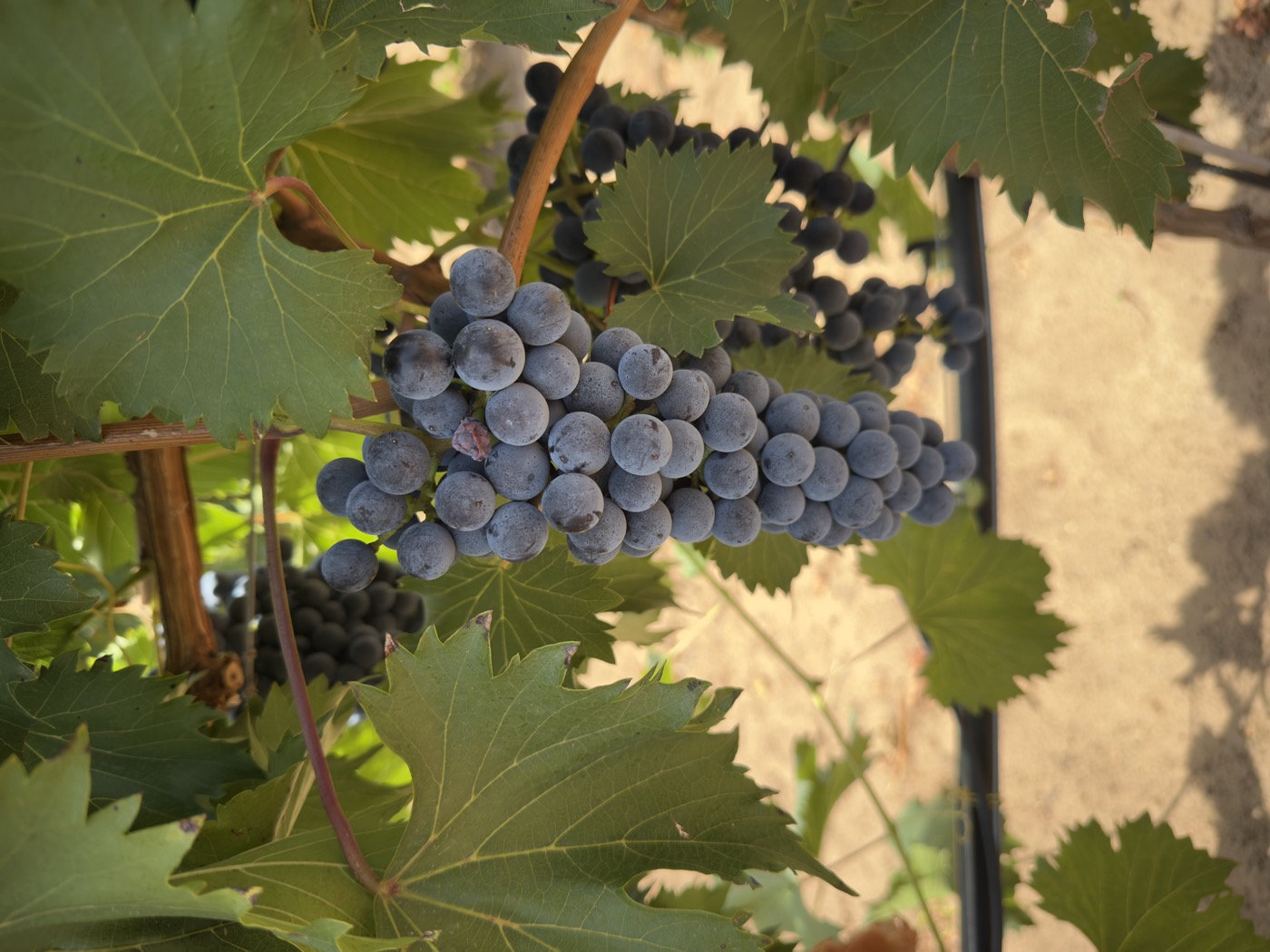
A ripe dark grape cluster hanging in the canopy
Ripe and waiting for a picking decision.
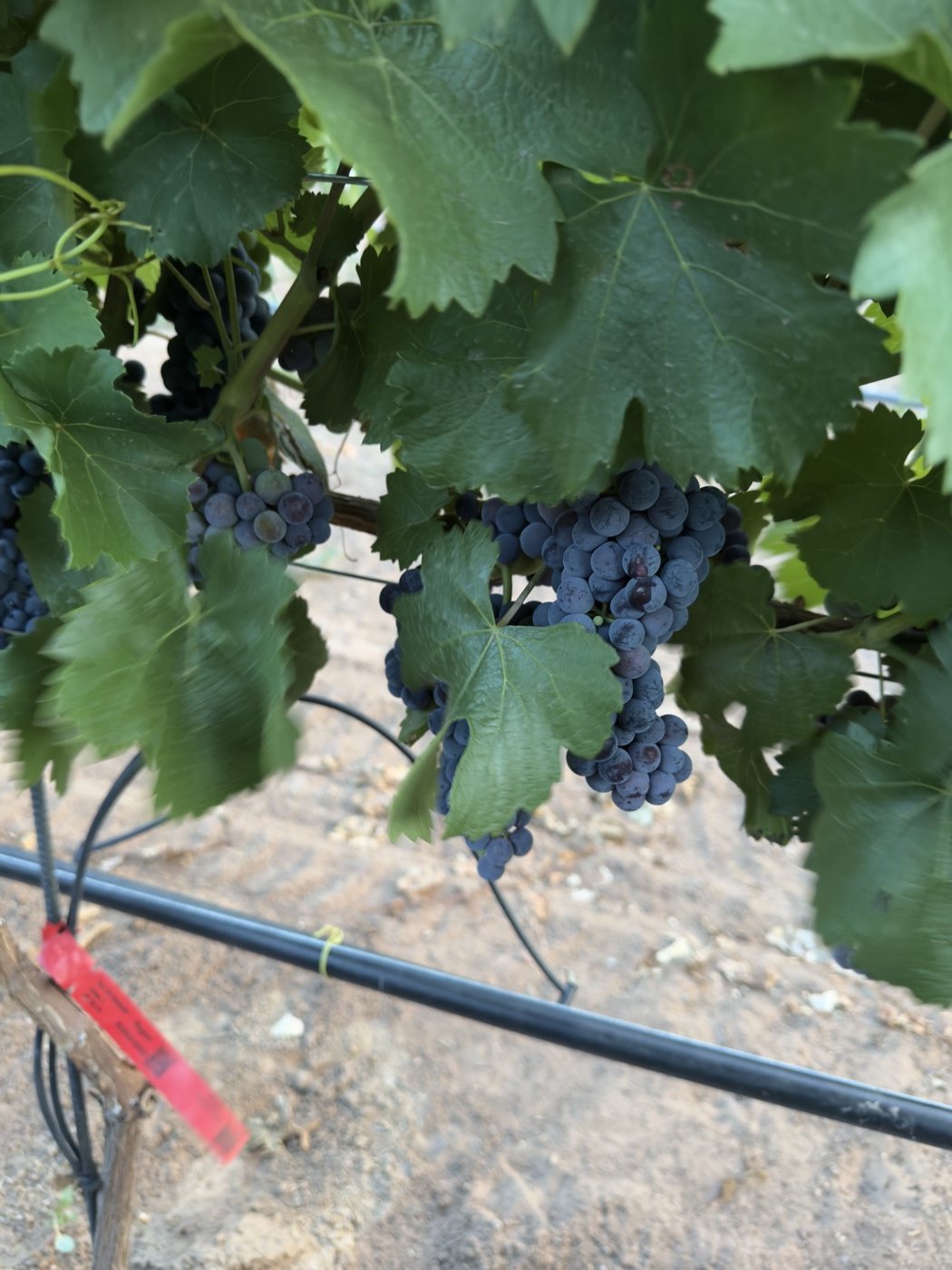
Clusters of dark grapes hanging through the canopy
Fruit set deep in the summer canopy.
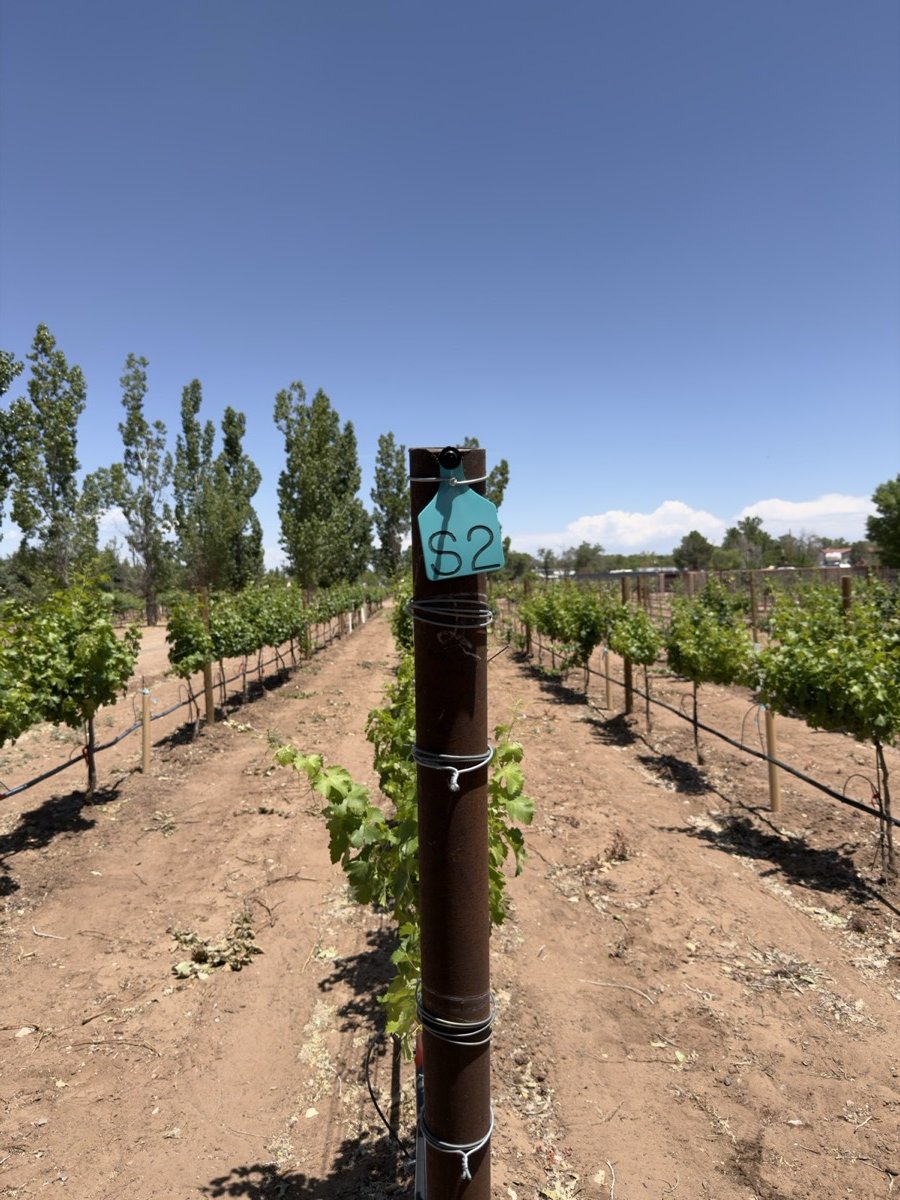
Row marker S2 among young vines at Pajarito Vineyards
Every block is tagged and tracked — S2, reporting for duty.