 Pajarito Farms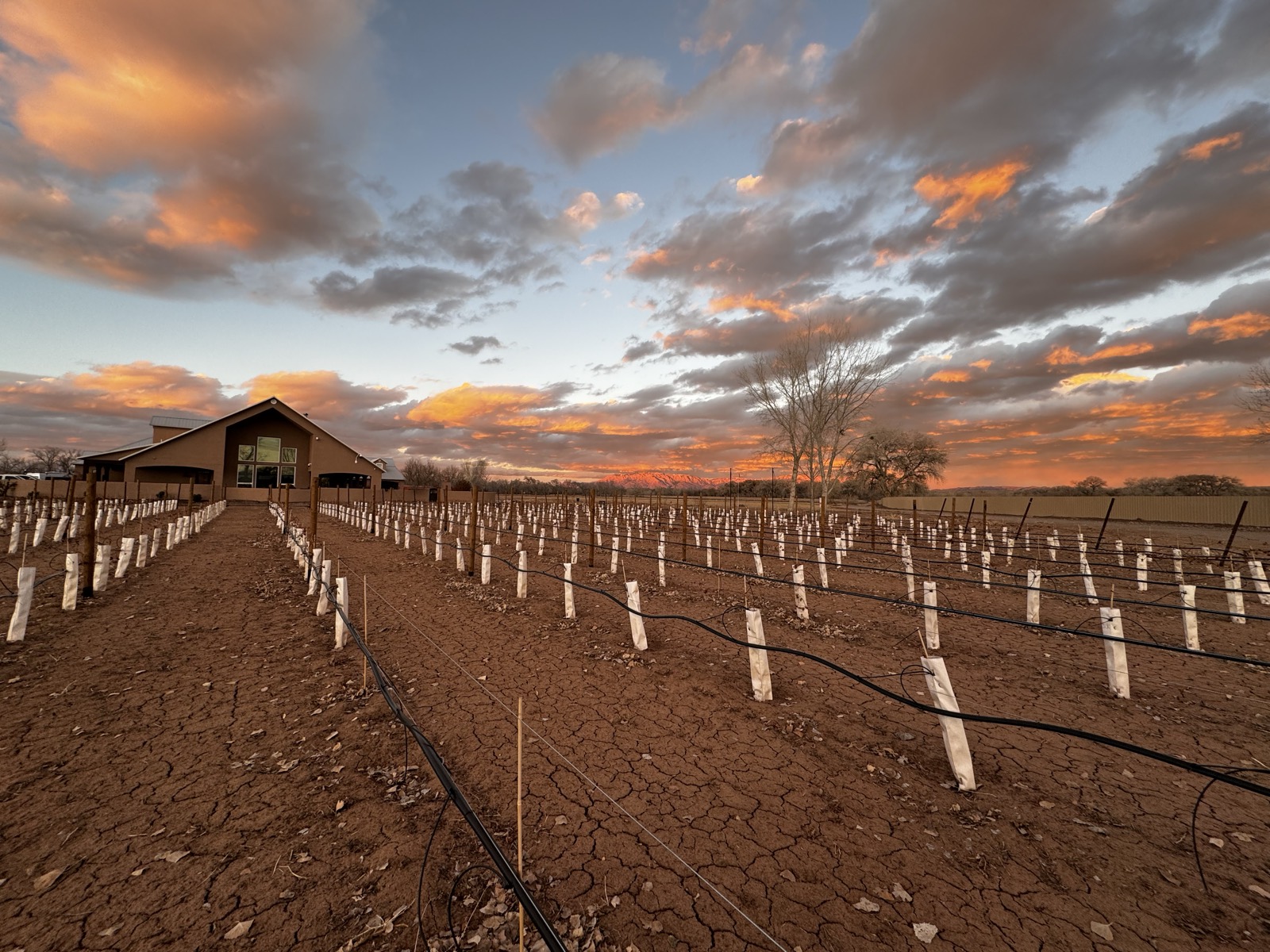
The Vineyard
4.5 acres of decisions.
A working vineyard
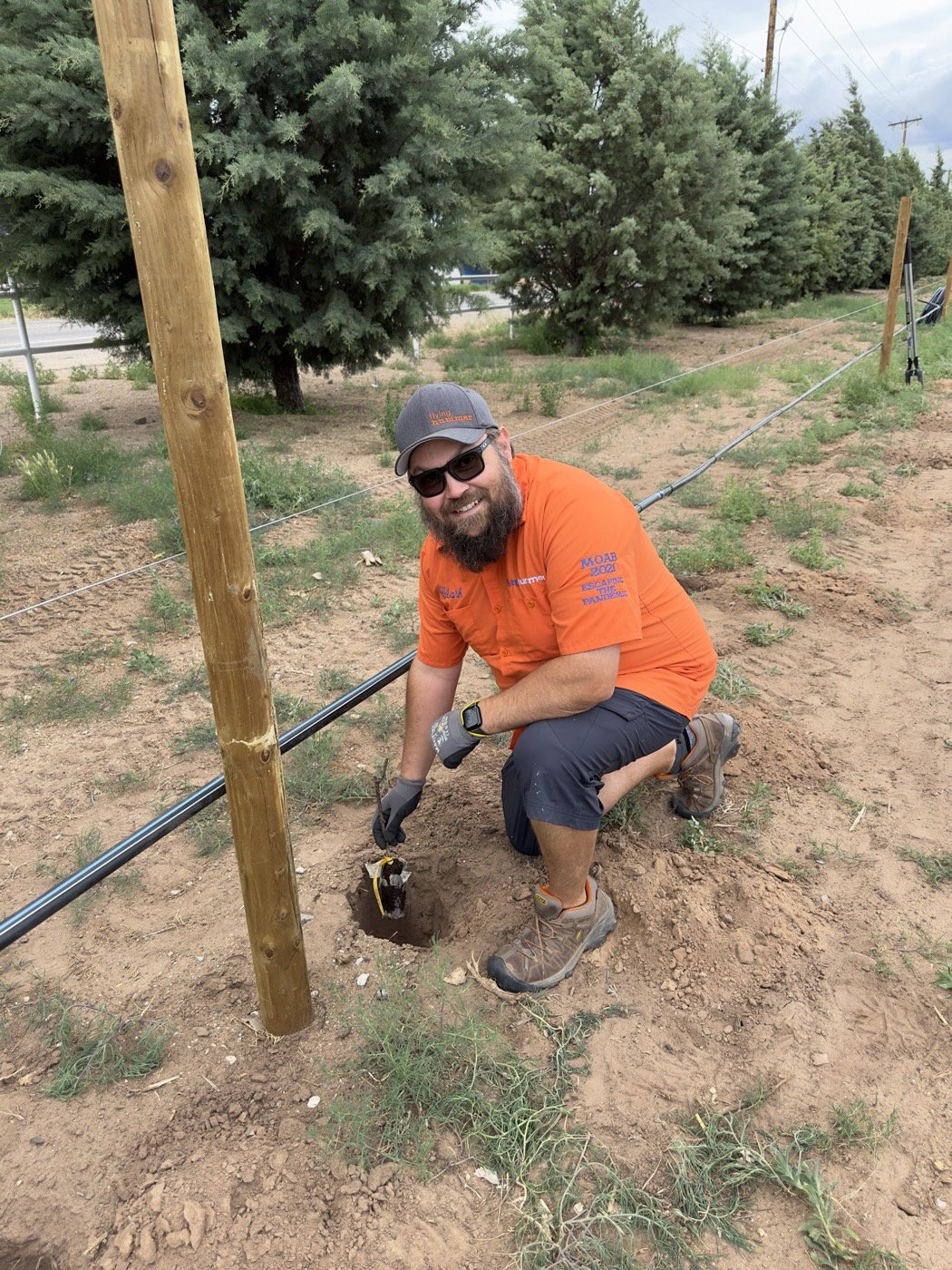
Pajarito Vineyards sits in Albuquerque, New Mexico — roughly 3,500 vines across 4.5 acres, primarily wine grapes, with lavender on the property and room reserved for expansion.
The vineyard wasn't planted in one heroic weekend. It went in over multiple seasons, and that's been an advantage: every planting taught us something about spacing, trellising, rootstock, irrigation, and variety selection, and the next planting got the benefit. Decisions here are based on what actually happens in the field — not on what a textbook written for another climate says should happen.
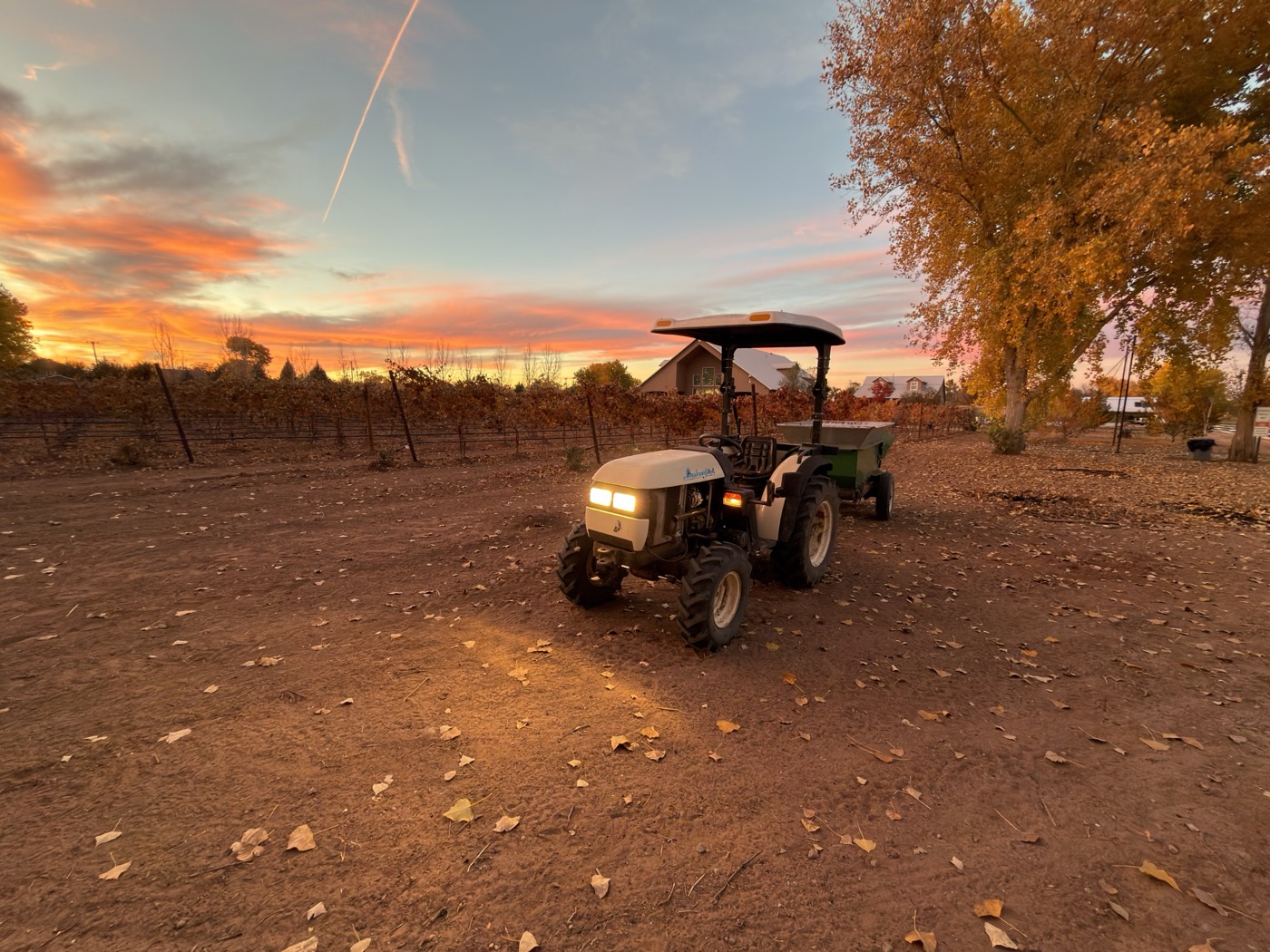
As the vineyard grows, so does the machinery. We're steadily working toward more mechanization — the goal is a vineyard a small crew can farm well, without cutting corners on the work that has to be done by hand.
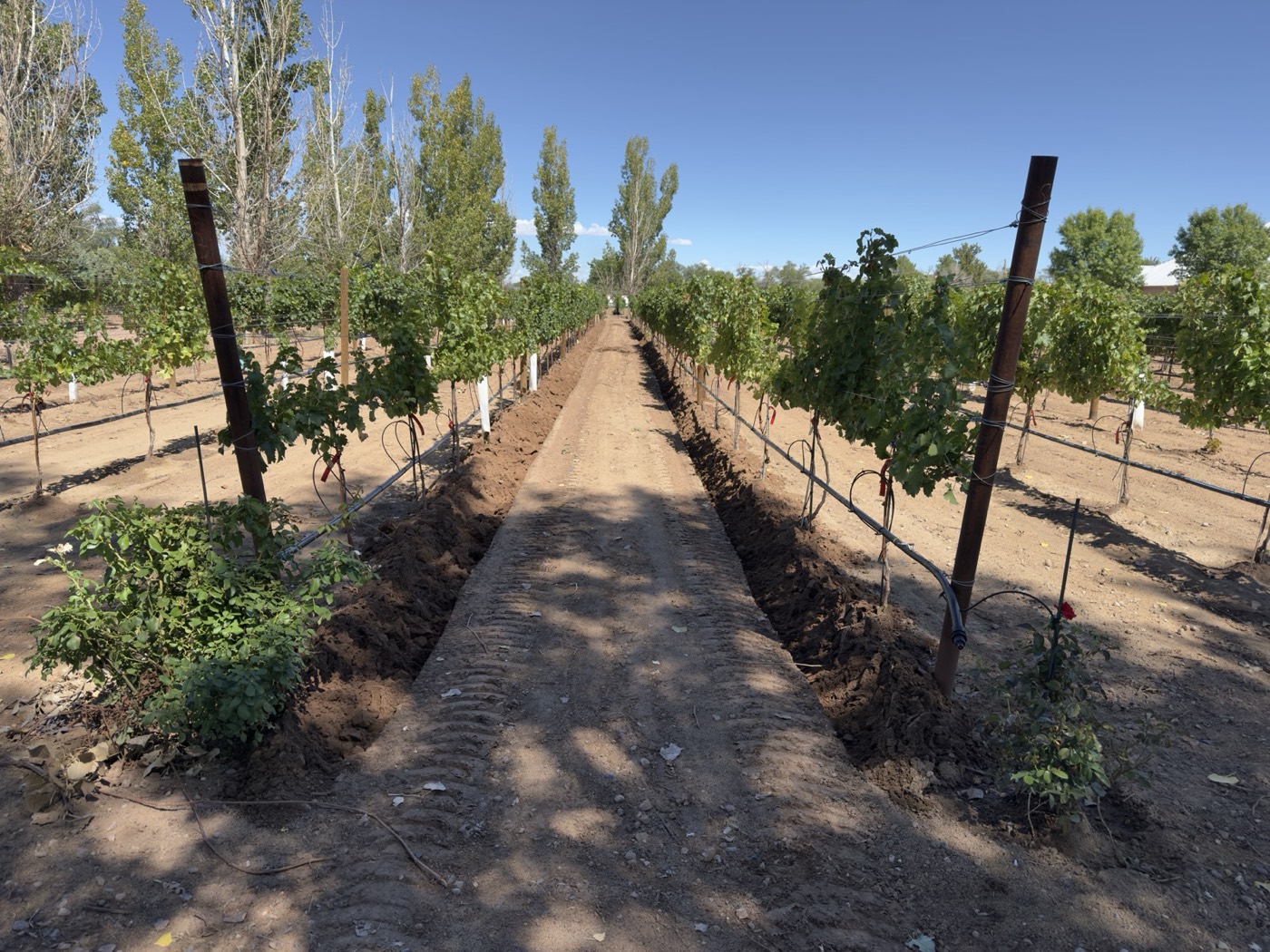
Farming at high desert
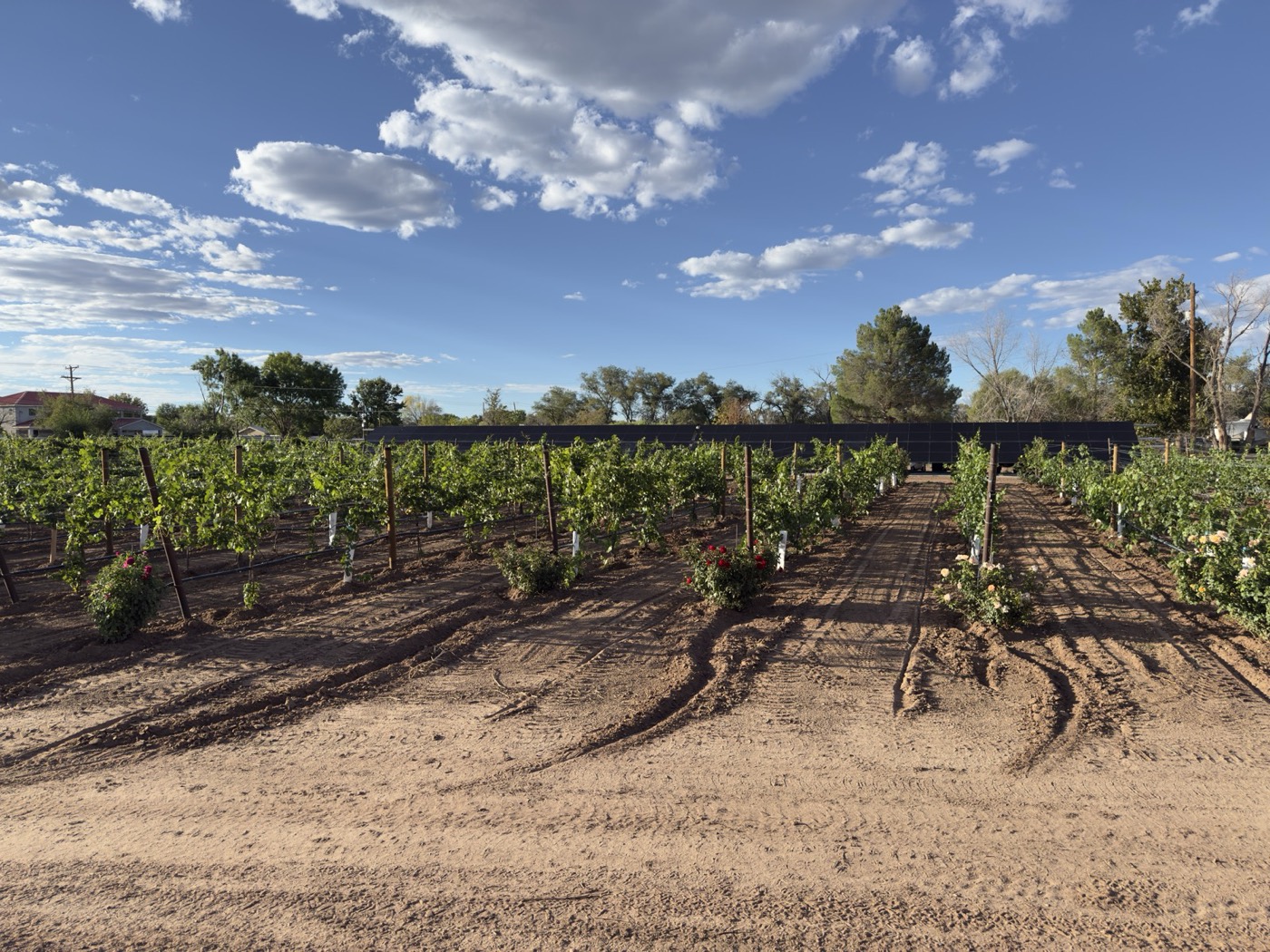
Wine grapes have grown in the middle Rio Grande valley since Spanish missionaries planted the first vines near Socorro by 1629, and by 1880 the New Mexico territory ranked fifth in the nation in wine production. This climate has been proving itself for almost 400 years — our job is to farm it well, not to reinvent it. These are the four facts that shape almost every decision on this property:
Intense sun
Ripening is rarely the problem. Restraint is.
Irrigation required
Rainfall doesn't farm this valley. Drip lines do.
Spring freezes
Frost after bud break can take a season. We fight back with smudge pots.
Diurnal swings
Hot days, cool nights — hard on planning, good for acidity.
The year in the rows
Five seasons of work
 01
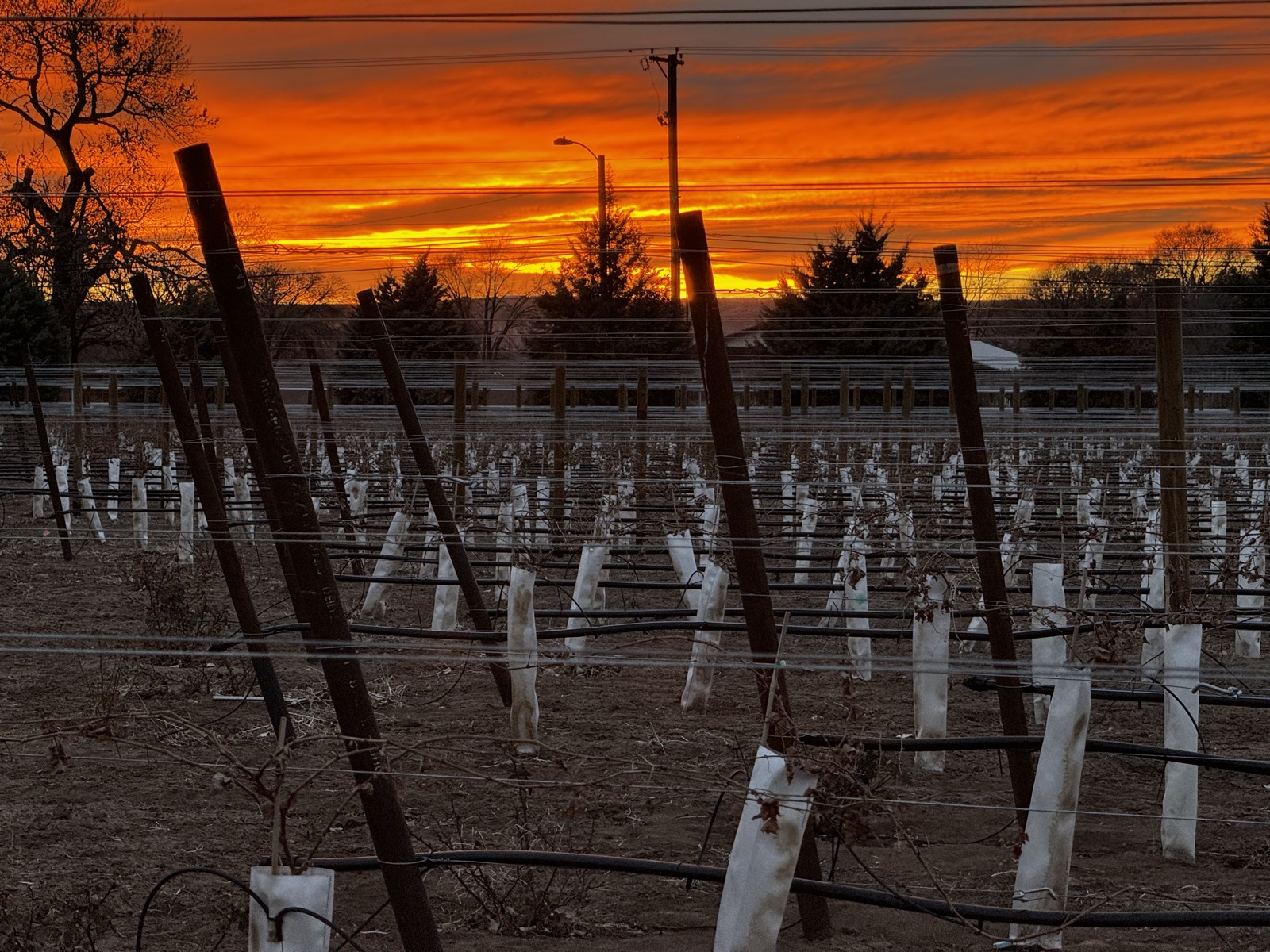
01Dormancy & pruning
Winter
Every vine gets cut back to the wood that will carry the year. Pruning decisions made in the cold set the crop months before the first leaf.
 02
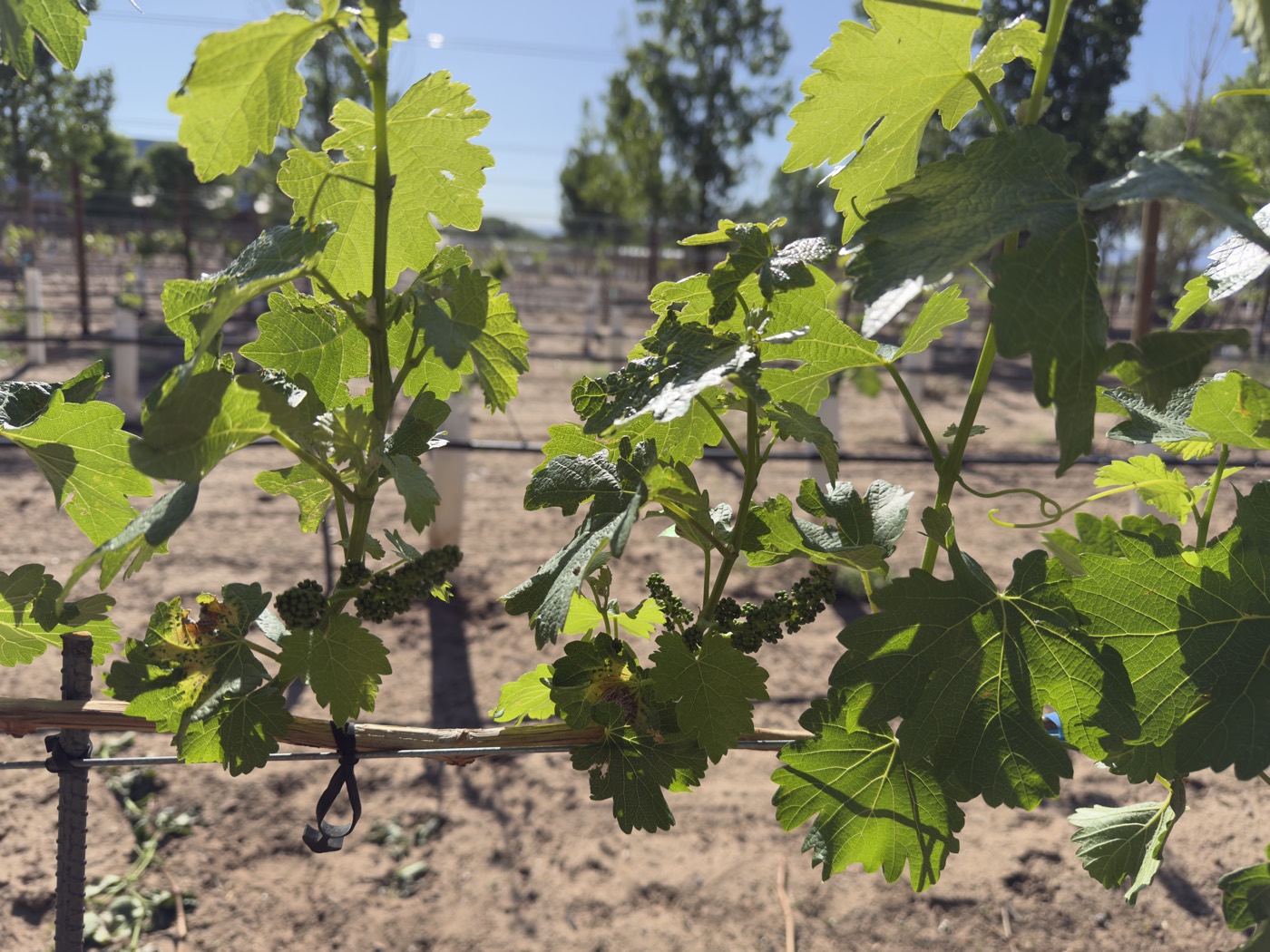
02Bud break
Spring
The most nervous weeks of the year. New shoots emerge — and every clear, still night is a freeze-risk calculation.
 03
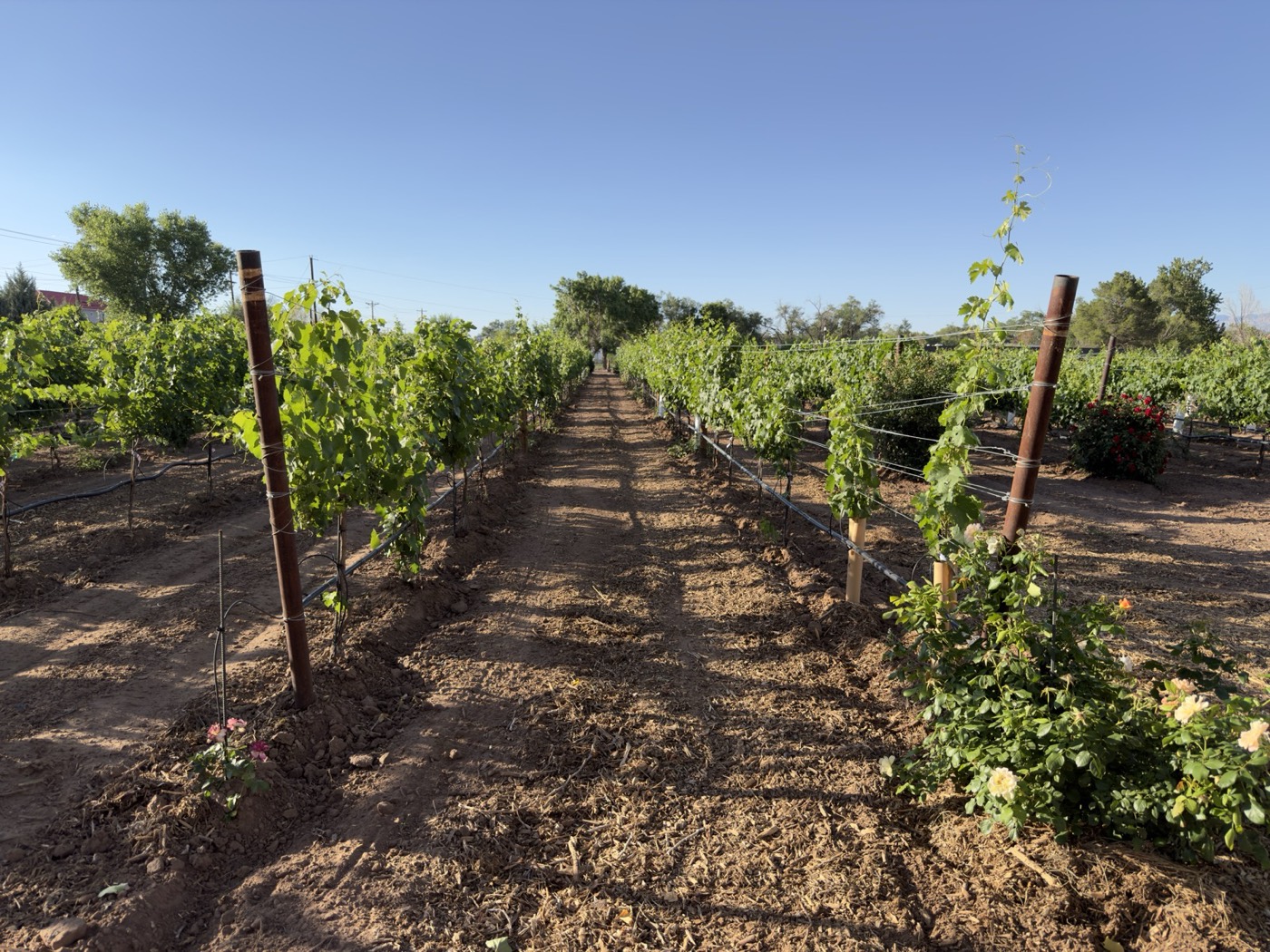
03Canopy growth
Late spring – summer
Rows fill in fast under desert sun. Shoot positioning, wire lifts, and irrigation management are the daily work.
 04
04Veraison
Mid–late summer
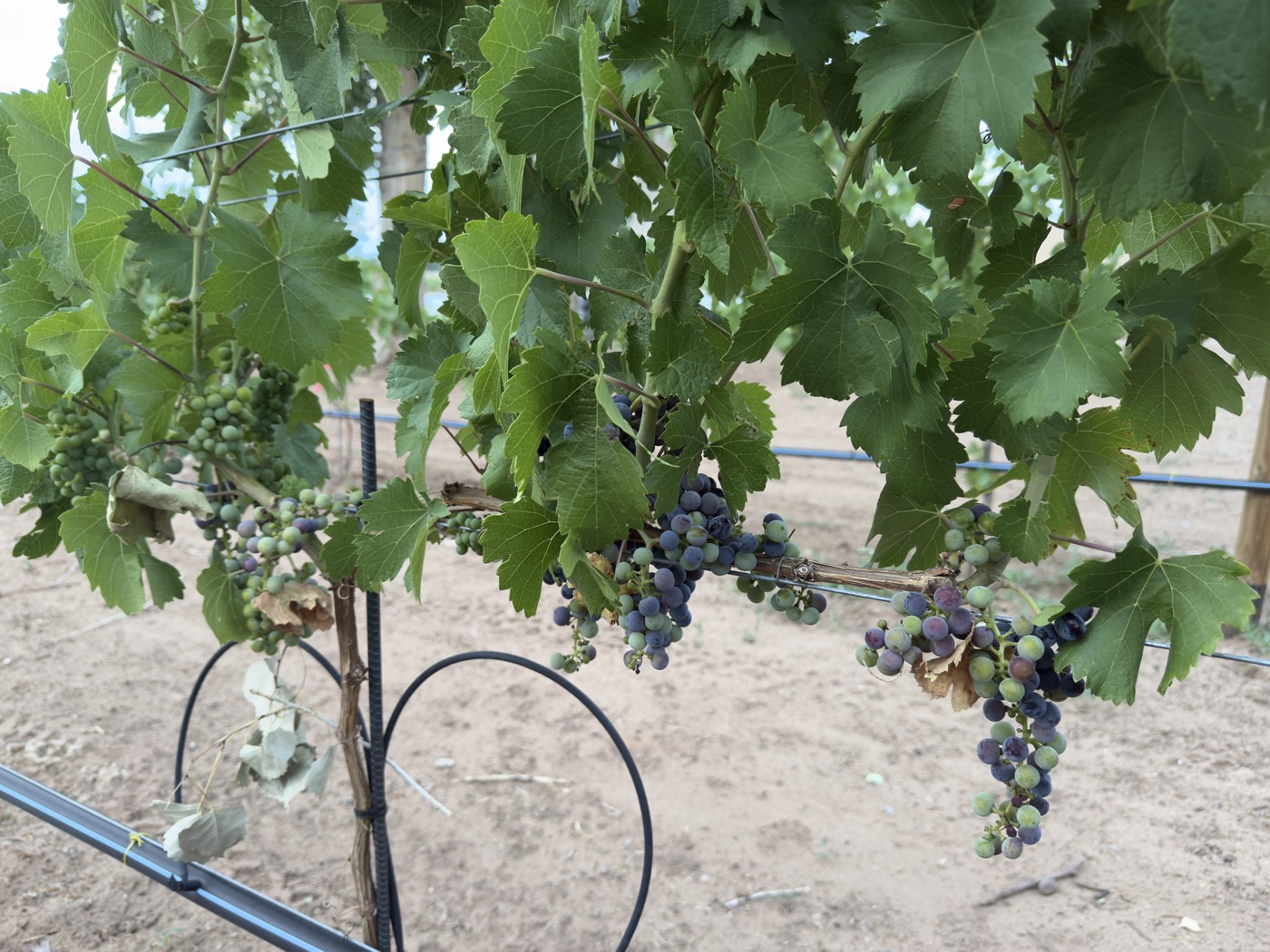
Berries soften and color. From here, it's acid and sugar curves — and the countdown to picking decisions.
 05
05Harvest
Late summer – fall
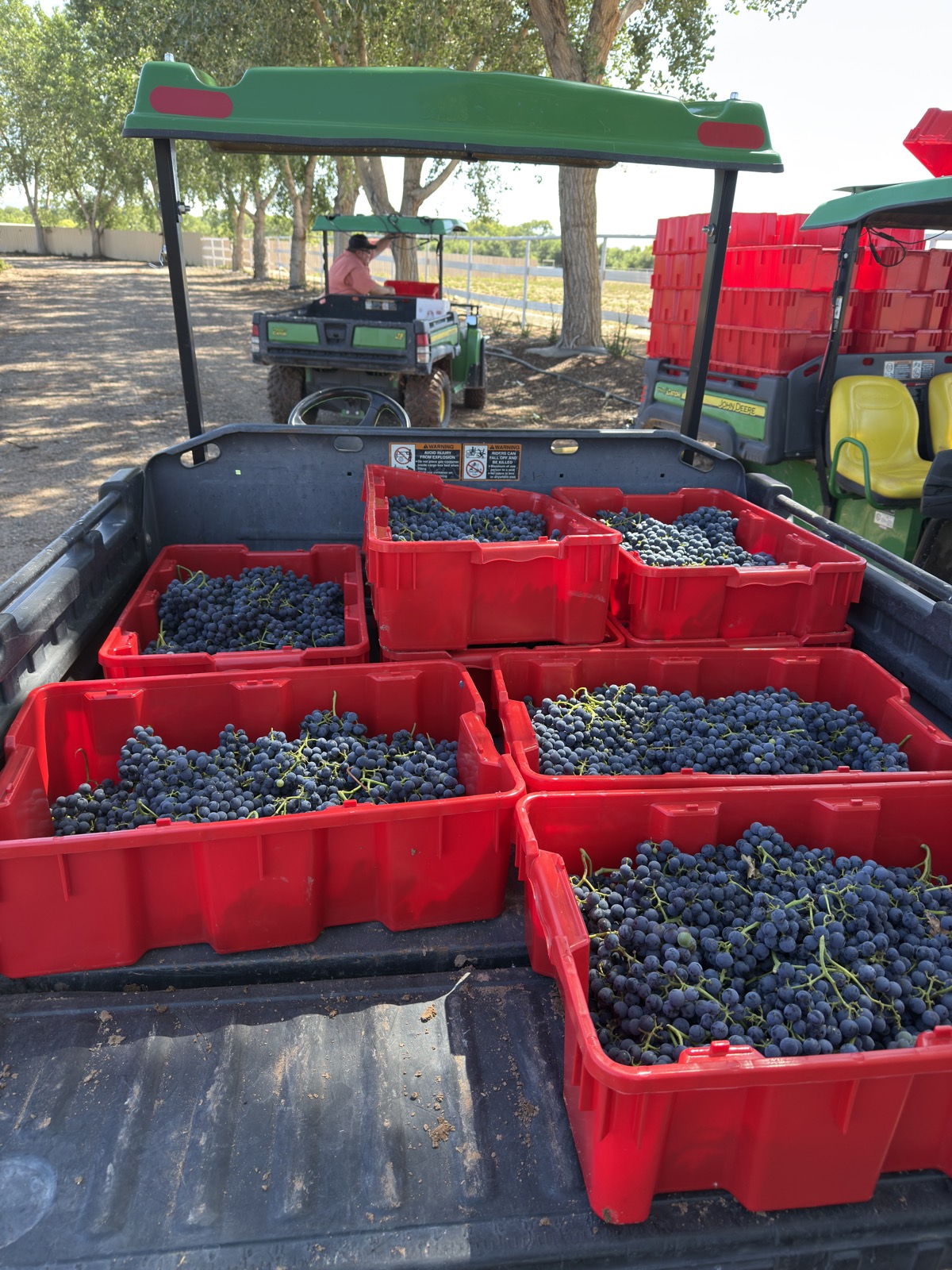
Picking starts at first light while the fruit is cool. Small lots, variety by variety, each at its own moment.